
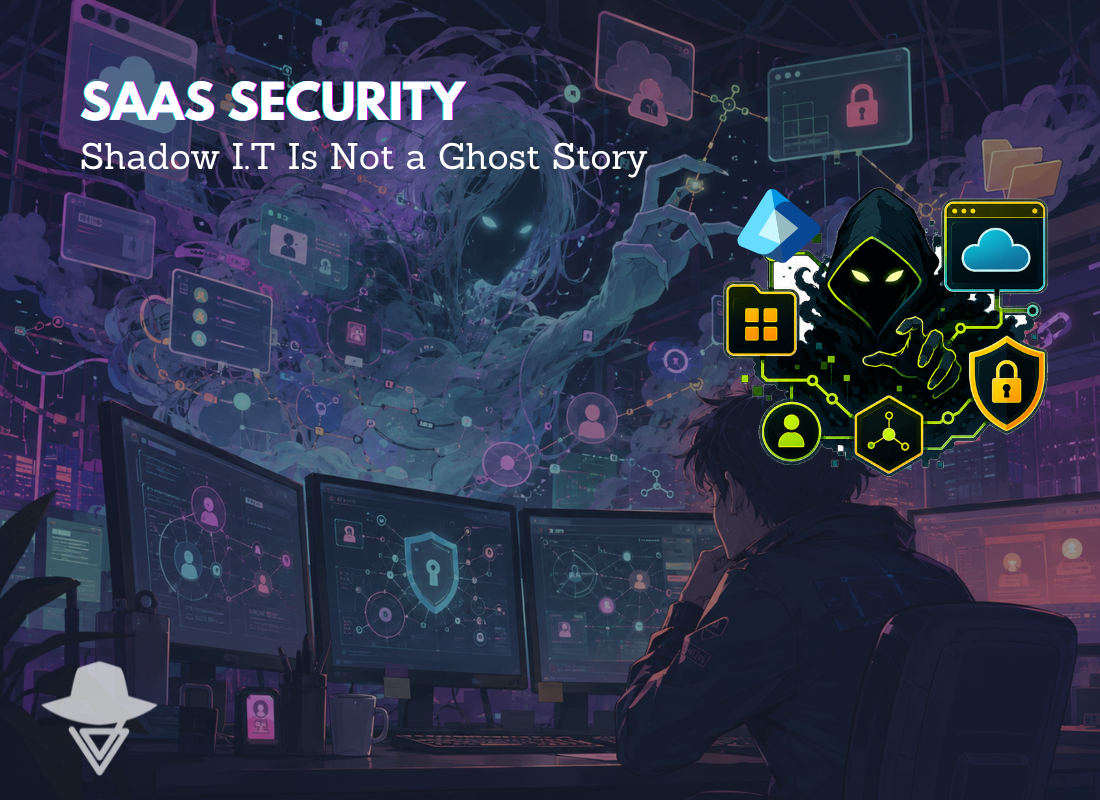
Every company has an official list of tools. Then there is the real list: free trials, browser extensions, plugins, old workspaces, vendor portals, abandoned dashboards and integrations created for a “quick report.” Nothing says “mature security program” like discovering sensitive data is protected by a shared link and organizational memory.
The problem is not that SaaS is insecure. SaaS keeps teams fast. The problem starts when it grows without visibility, ownership or governance.
And that is where things get interesting: some of the biggest SaaS risks are not hiding in complex attacks, but in forgotten accounts, quiet integrations, public links and tools nobody remembers approving. This article shows how those risks appear, why they are easy to miss, and where companies can start taking back control.
What Is SaaS Security?
SaaS Security is the practice of protecting the applications where a company already works every day.
That means controlling accounts, permissions, integrations, stored data, settings, external sharing, former employee access and applications connected through OAuth or APIs.
This is not about installing a firewall in front of a SaaS platform and declaring victory. SaaS Security is about knowing which platforms exist, what data they hold, who can access them and which connected apps can act on behalf of users.
If a tool stores company data or connects to a system that stores company data, it belongs to the attack surface.
Why SaaS Became a Security Blind Spot
SaaS became popular because it removes friction. A team can test a platform in minutes. A user can connect an app with “Sign in with Google.” A department can upload data before Security even knows the tool exists.
That ease helps productivity, but it also leaves old permissions active, external guests inside workspaces, public files exposed by accident and connected apps with access after the business need is gone.
Modern identity platforms treat this as a real control area. Microsoft documents controls for application consent in Microsoft Entra ID, and Google Workspace provides controls for which third-party apps can access Workspace data.
The lesson is not “block everything.” Convenience without review becomes exposure with a nicer user interface.
The Main Risks Behind SaaS Sprawl
1. Shadow SaaS
Shadow SaaS happens when tools are used without approval or visibility from IT or Security. The biggest issue is that the company no longer knows where its data lives.
2. Over-Permissioned Integrations
Some integrations ask for more access than they need. A simple calendar helper may request access to email, files, contacts and the entire drive.
OAuth is useful because it lets apps connect without sharing passwords. The problem begins when users approve broad permissions without understanding what the app can actually do.
3. Orphaned Accounts
Orphaned accounts should no longer exist or should no longer have access. Former employees, freelancers, vendors and people who changed teams often leave active access behind.
Without reviews, SaaS becomes a cemetery of valid accounts. Dramatic, but avoidable.
4. Misconfigured Sharing
“Anyone with the link” is convenient until the link reaches the wrong person. Public documents, dashboards and folders can quietly turn internal data into external data.
Where Companies Should Start
The first step is visibility, not panic.
Create an inventory of SaaS tools. Identify who owns each platform. Review users, admins and external guests. Check OAuth and API integrations. Remove orphaned accounts. Review public links and external sharing. Require SSO and MFA where the risk justifies it. Create a simple approval process before sensitive data lands in a new tool.
This connects with IAM, but it is not the same subject. IAM defines identities, authentication and access. SaaS Security asks where company data lives, which platforms touch it and what hidden permissions exist. For the identity foundation behind this, VSec covers the topic in IAM Isn’t Just SSO: The Team, the Process, and the Tools.
CISA’s Secure Cloud Business Applications guidance reinforces the same direction: SaaS environments need visibility, secure configurations and continuous review.
Conclusion
SaaS is where work happens, data is stored, decisions are made and integrations quietly multiply like rabbits with API keys.
The main lesson is simple: companies can’t protect what they cannot see. SaaS Security starts with knowing which tools exist, who has access, what data is stored there, and which integrations are connected.
Ignoring SaaS risk does not make it smaller. It only makes it harder to see, which is very convenient for attackers and absolutely terrible for everyone else.
A VSec security assessment can help identify exposed data, risky integrations and forgotten access before attackers do.